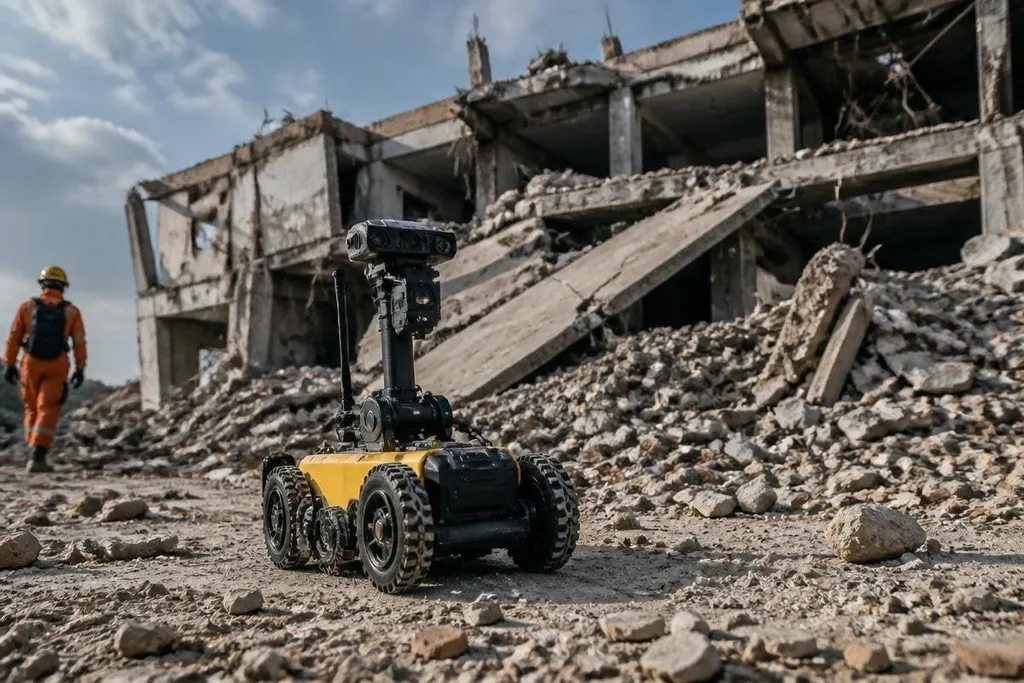
A search-and-rescue robot may enter a damaged building before a person can safely reach it. AI helps that robot sort sensor data, find a route, and flag signs of life while conditions change around it.
Quick read
- AI combines camera, thermal, audio, and depth data.
- The robot still needs clear safety limits and human control.
- Field proof matters more than a smooth demonstration.
Turning sensor data into a map
A rescue robot may carry several sensors at once. Cameras show shape and color, thermal sensors detect heat patterns, microphones pick up sound, and depth sensors measure nearby surfaces.
AI software can compare those inputs and build a working picture of the area. This matters in smoke, dust, darkness, or spaces where one sensor gives an incomplete view. A camera may see a wall, while a depth sensor shows a gap beside it.
The map also changes as the robot moves. A collapsed room may block the route shown in the first scan, so the system must update its plan from fresh readings. That process is often called mapping and localization: the robot estimates where it is while building a map around itself.
A map is useful only when the robot can act on it. The system must separate open floor from loose rubble, cables, steep drops, and surfaces that may shift under its weight.
Finding people and hazards
AI can sort visual and thermal data to flag shapes that may be a person. It can also mark heat sources, blocked passages, damaged structures, or other objects that deserve a closer look.
These alerts save time for the operator, who may be working from a control station with several video feeds. The robot can point to a section of the map instead of making the operator scan every frame by hand.
That alert remains a lead, not proof. A warm pipe can look like a human heat source, and a person under debris may show only a small part of their body. The operator needs the raw sensor view and enough context to check the result.
A rescue robot earns its place when an alert leads to a safe route through debris. A report on Robot24.com can connect that result to the robot, test site, date, and operator role before the article examines route choice and task fit.
Choosing a route and a task
The robot may use AI to rank possible routes by slope, surface condition, distance, or known hazards. It can then suggest a path while a human operator approves the movement or takes direct control.
The split matters. A robot can react faster to a new obstacle, but a rescue team must decide where the machine should go and what risk is acceptable.
Radio loss, low battery, poor visibility, or a damaged track can change the plan within seconds. Those limits make operator control part of the route decision, not a separate task.
When sent to inspect a corridor, the robot may switch to closer thermal scanning after its sensors flag a possible person. That saves a trip back to the control team, though the change still needs a clear record so rescuers know what the system did.
I’d judge these systems by the quality of their warnings and recovery after errors, not by how smoothly they move in a clean test area.
Where the limits remain
Rescue sites are hard for machines because the ground is uneven, the data is incomplete, and the cost of a wrong move can be high. AI may misread dust as a solid barrier, miss a person hidden under material, or suggest a route that looks safe but cannot support the robot.
Training data also shapes the result. A system built from ordinary indoor scenes may struggle with broken walls, low light, unusual body positions, or debris arranged in ways it has never seen.
Human control remains necessary when the robot faces a new hazard. Teams also need logs that show which sensor input led to an alert, when the route changed, and whether a person approved the action.
A practical test for rescue teams
Before choosing a robot with AI software, check these points:
- Test smoke, darkness, dust, and damaged surfaces that match the team’s work.
- Check whether an operator can take control without waiting for the system.
- Ask how the robot reports false alerts and missed detections.
- Measure radio range, battery time, sensor coverage, and recovery after a loss of signal.
- Confirm that the system stores a usable record of alerts, routes, and operator actions.
The next proof will come from repeatable trials in damaged structures, where teams can compare detection, route choice, recovery, and operator workload. Until those results are public, AI should guide rescue robots while people keep the final say.